
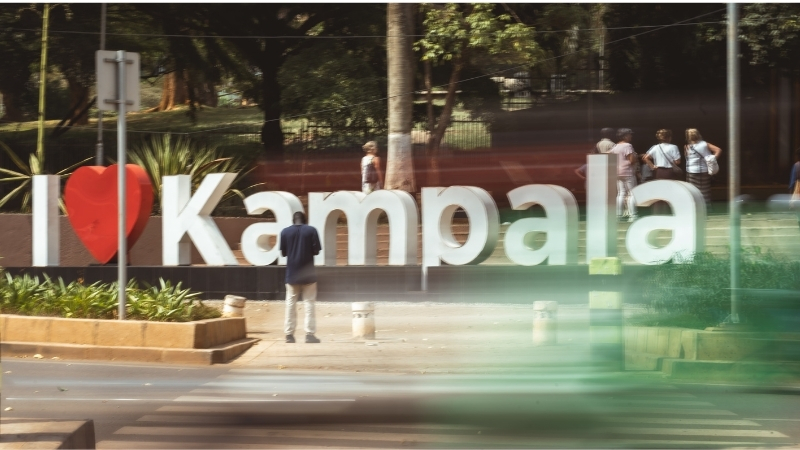
I was born in Kampala. My family left in 1980. I grew up in London and spent twenty years building infrastructure for other people.
At Cable & Wireless I sat between commercial and technical teams. I developed and sold enterprise products: unified communications, government VPNs, cloud platforms. Three 0-to-1 builds. The work was solving business problems with infrastructure, then selling the result.
After Cable & Wireless I moved into physical-digital infrastructure. £200 million of it at Pixel Artworks: large-scale immersive venues, projection systems, work with NASA and CERN, a venue programme in Bali. Then Coventry City of Culture, a £56 million programme I delivered through COVID and a funding collapse. Coordination across fragmented actors. Capital deployed where it is hard. The Butterfly Trail. Opening the Reel Store. Each project the same pattern: build the thing that connects the things that already exist.
I visited Uganda regularly. As a user, mobile money was extraordinary. Instant transfers. Float at every corner. Payments by phone in places where card terminals did not exist. In many ways it was ahead of European banking. After using it, the gaps became visible. No interoperability between providers. High fees on small transactions. Limited credit. Banks locked out of the mobile economy. Two parallel systems running side by side. Rarely intersecting.
In 2003, a Scottish consultancy called Gamos documented something unexpected. Ugandans were transferring airtime to relatives who resold it for cash. Airtime had become currency. Years before Apple Pay was born, telcos built USSD interfaces. Shop owners became agents. By 2018, Kenya had 110,000 M-Pesa agents. Forty times its ATMs. Uganda invented airtime-as-currency. Kenya built M-Pesa on it and integrated banks in 2012. Uganda remains unbuilt.
When I returned, I found a country where 66% use mobile money and 13% use banks. Infrastructure exists. Integration does not. Telcos move cash. Banks hold capital. Fintechs address symptoms. The connection between mobile money data and bank capital does not exist. Sendu is that infrastructure.
From the outside, mobile money looks solved. Two histories explain why it is incomplete. Ugandans remember the 1990s: properties seized, families displaced. Queues, manual ledgers, hours waiting, forms in triplicate. Distrust earned, still carried. Then telcos built what banks could not. Instant transfers. Float at every corner. Trust through reliability. The result is two systems that serve different needs and share nothing. Sendu connects them.
I moved to Kampala to deploy it. The team is here. The SACCOs are here. Every decision gets tested in the field the same week.